Introduction
The thought of being a self-employed digital marketer is both thrilling and daunting. With your knowledge of search engine optimisation, social media management, and paid ads, you are ready to go. The only problem is you don't have a client. You don't have a published portfolio. You don't have any income and without clients, there is considerable doubt as to your ability to produce results.
This is by far the biggest problem you will face as a new freelancer. The good news is you don't need this much experience or a big network to land your first client. All you need is a systematic approach, strategic positioning, and the willingness to act.
The purpose of this document is to show you how to acquire the first client for your freelance digital marketing business, in a systematic process, with viable strategies you can implement immediately.
Why Landing Your First Client is So Difficult

Before we get into the numerous solutions available to the many challenges of acquiring your first freelance client, let's take a look at the causes.
- No portfolio
- No social proof
- No clear niche
- No idea of worth
- No marketing
After your first client, most of the work is done for you using social proof, referrals, and your portfolio.
Step 1: Pick a Niche Before You Pick a Client
Newbies make a broad "digital marketing services" offering one of the biggest mistakes. Niching down has the opposite impact. You actually get more clients.
Examples of promising niches
Instagram marketing for local restaurants
SEO for real estate agents
Google Ads for e-commerce startups
Email marketing for Coaches and Consultants
Owners aren’t looking for a jack-of-all-trades. They want someone with relevant knowledge to their pain. Niching means your outreach is more relevant and personal.
Step 2: Build a "Proof of Work" Portfolio (Even Without Clients)
Paid clients aren’t a requirement to build proof for a portfolio. Beginners credibly build portfolios without clients by doing any of the following:
Run a mock campaign — Creating a fictitious business’s social media calendar, ad campaigns, or SEO audits is a great case study.
Offer a free project — Work on any small business or a friend's business for a case study in exchange for a testimonial.
Improve your own brand — Your personal growth on social media is proof of work.
Create skills-showcasing content — Post marketing audits on LinkedIn with the steps. Share results of your ad campaigns.
This portfolio is a tool for sales in all your future conversations.
Step 3: Finding Your First Freelance Client

- Cold Outreach (Highest Control, Highest Effort)
Choose 20 to 30 small businesses that have little to no online presence. This includes businesses without an Instagram, a poorly optimized website, and no Google ads. Email or DM them on Instagram with a short, value-focused message.
An example message could look like this -
> Hi [Name]. I saw [observation, e.g., "your Instagram hasn't posted in 3 weeks"]. I help businesses grow with social media and would like to offer 2 ideas (with no obligation). Would we be able to chat for 10 minutes?
The key factor in these messages is always going to be the details you provide. These messages are the most noisiest when they are general, but if you provide a singular observation you will always get a response.
- Freelance Platforms
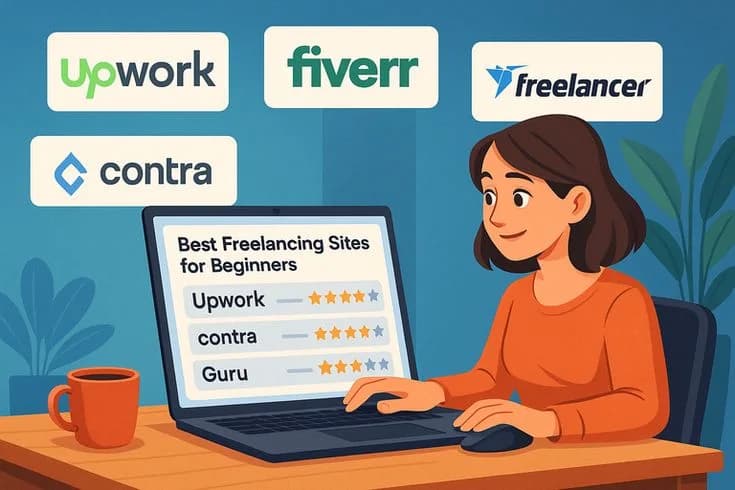
Begin your freelance career on platforms like Upwork, Fiverr, and Freelancer. Building your client base is literally a part of the job on these platforms. Here are a few tips for getting noticed on these big platforms:
Use a specific freelance title related to the niche you want to serve (e.g., "Local Business Instagram Growth")
Apply with a personalized proposal (no templates)
Set your fees lower than the competitors to start, then raise them when you gain traction.
- Local Businesses
Going into shops and businesses like gyms and restaurants is far more successful than the online cold outreach we've been discussing. This is largely due to there being little to no competition as most outreach is online, and you will build more trust with in-person contact.
- Your Existing Network
You should let everyone know what you are doing, including friends, family, and old coworkers. What many assume are random first clients often come from friends or family saying, “Oh, my cousin has a boutique and needs help with her Instagram."
- Content Marketing (Long-Term but Powerful)
When you regularly post on LinkedIn or Instagram with marketing tips, people will eventually begin to see you as a marketing expert. They will come to you.
Step 4: How to Pitch Without Sounding Desperate
If they have to choose between your confidence and your experience, people choose your confidence. You should frame the pitch as you being a problem-solver, not just someone looking for their first client.
You should avoid the following
> "I'm just starting as a freelancer and am looking for my first client, so I'm going to charge really low."
Instead, you should say
> "I help businesses in (niche) reach (target) goals, and I had a quick idea to improve your brand."
Step 5: Pricing Your First Project

One of the biggest mistakes beginners make is to charge very low, or worse, work for free, with no expectations of receiving payment in the future.
Here are a few of the sustainable ways to price projects
Choose a flat project price with a defined scope, such as: "I'm charging between ₹5,000 and ₹15,000 for one month of social media management."
Price the project as a "founding client" deal, with a low-but-fair price in exchange for a testimonial and permission to post the client as a case study.
Choose a base project fee, and offer a bonus for meeting target KPIs (be confident, this is a more advanced structure).
If you are new, it is very important to remember that you should not work for free. You should always charge at least a very small fee. This will help you establish a value for the work and will ensure that the client is committed.
Step 6: Delivering Results That Turn Into Referrals
Acquiring clients is not the only step. Delivering outstanding results is how to grow your client base.
From the start, set expectations that you will be able to deliver.
Being proactive by communicating on a consistent basis strengthens your relationship. Weekly updates are key.
Screenshots, analytics, and reports all help in documenting results.
Once results show, ask the client for their testimonial and a referral.
Receiving a referral is the best form of marketing. Happy clients are the goal.
Common Mistakes Beginners Make

Attempting to get big brand clients instead of small biz clients that are much easier to get
Guaranteeing over-the-top outcomes such as going viral
Not having a portfolio or proof of previous sustainable work and contacting others with a request to hire you
Failing to communicate and forgetting to follow up after someone has neglected to respond to you
Too much of a focus on pricing, results, and output is on the threshold of being unsustainable
Conclusion
Strategies are the most vital part in getting your first digital marketing client: choosing a niche, building proof in your own time, reaching out with messages that are personal and value-based, and having a fair and sustainable pricing structure. Delivering exceptional results to the first client gained ensures the following referring clients will keep coming. Starting is always the most challenging part. Client #1 is the hardest; after that it's all compounding.
FAQs
Q1 How long does it take to get your first freelance digital marketing client?
It differs from person to person, but for most it takes between two and six weeks of continuous outreach (10 - 15 personalised messages) to gain the first client.
Q2 Should I work for free to get my first client?
It's fine to give a minor discount, but don't take on pro bono work to get your first client. It can attract the kind of client who doesn't respect your time and ultimately will make your work feel less valuable.
Q3: Do I need certifications to freelance in digital marketing?
While most digital marketing certifications like HubSpot and Google Ads will add an additional level of credibility, none of them is required to get clients. Most clients value the results you've produced for your other clients and your portfolio over any certificate you possess.
Q4: What's the easiest digital marketing service to start freelancing in?
If you're just starting, social media management and performing your first SEO audit are the digital marketing services that will come easiest to you.
Q5: How much should a beginner charge for freelance digital marketing?
As a beginner, you should expect to charge your clients between ₹5,000–₹20,000 per month, depending on your field and location. You should also consider the client niche as well. As you expand your portfolio and deliver results, your pricing should increase as well.