On-Page SEO: The Complete Beginner's Guide to Higher Google Rankings in 2026
Master On-Page SEO with step-by-step strategies for keyword optimization, title tags, meta descriptions, internal linking, and content optimization to rank higher on Google and drive more traffic.
16 min read
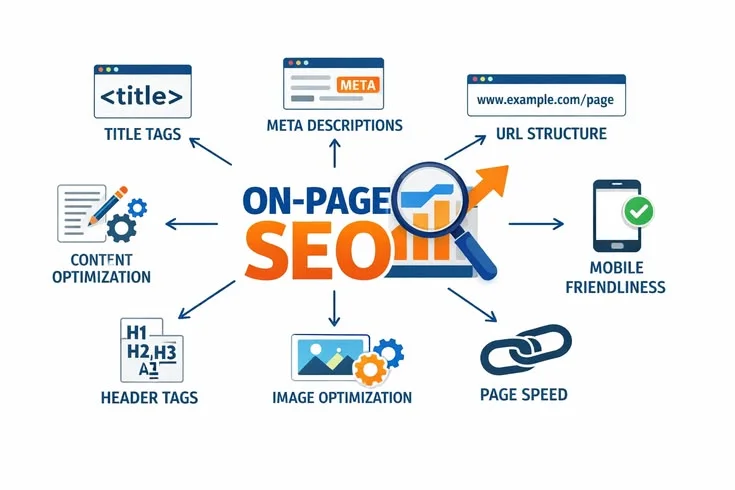
What if you spent a month writing an article and no one read it because it didn’t show up on Google Search? That’s a reality for thousands of websites that ignore on-page SEO.
As a website owner, on-page SEO will be the most important factor you can control. It combines both the art and science behind structuring your clear and relevant web pages to entice search engines like Google to rank them. The best part is you don’t have to be a tech wizard to achieve it.
In this complete on-page SEO guide for beginners, we will cover every tool and every factor, and provide a step-by-step approach for every web page you have, starting today. This guide will be helpful for a wide range of web pages, from blogs and online course platforms to business websites.
Let’s get started.
What is On-Page SEO?
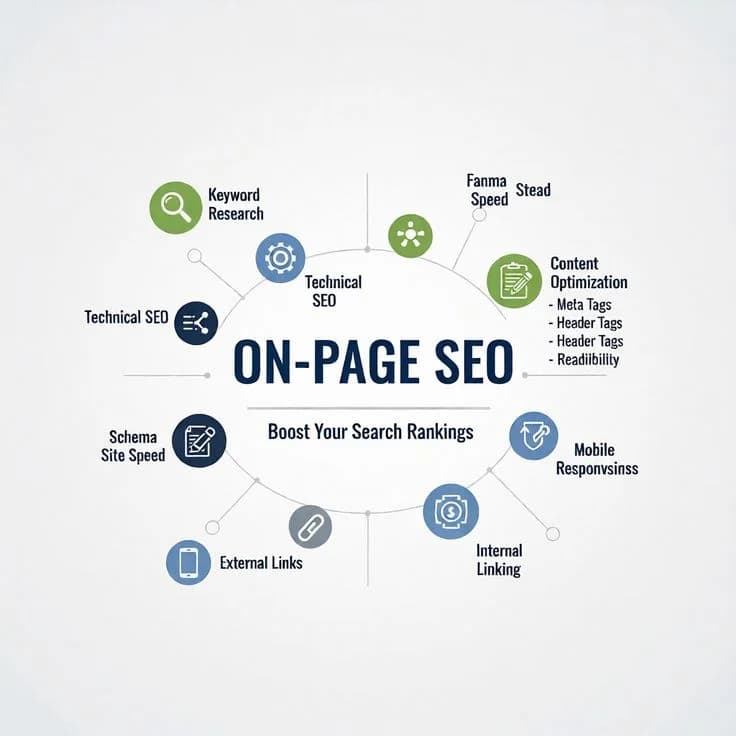
On-page SEO (or on-site SEO) is the practice of optimizing web pages to attract relevant traffic and rank higher in search engine results pages (SERPs). On-page SEO is everything you can control on your website. It is the opposite of off-page SEO.
On-page SEO involves the words on your web pages, your HTML tags, page structure, images, and the overall web experience for your visitors.
On-page optimization is how you communicate to Google that your page is relevant and that it is high quality; therefore, it is worth ranking for a specific user's query. It is the first step in the direction of long-term sustainable and organic growth to learn what is on-page SEO.
Why will on-page SEO be important in 2025?
Google has changed a lot over the years; in the past, it was enough to just repeat a keyword many times in order to rank. Now, thanks to the hundreds of signals powered by AI, Google decides what pages deserve to rank. This is why on-page SEO will always be the starting point of any successful search.
- 68% of online activities start with a search
- 67% of clicks are on the first 5 results of Google\'s organic search
- Pages that are optimized on their on-page SEO rank higher and convert better, and are faster to load
- On-page SEO lowers bounce rate and improves user experience
- There is no cost as in paid advertising
If you own a website, a blog, or are a digital marketer, on-page SEO skills will provide the most benefit and highest return.
The 12 Major On-Page SEO Factors
Master these on-page SEO factors as they are the most important ones for Google's algorithm when it crawls your page. You will be ahead of most of the websites on the internet.
- Title Tag
The most vital on-page SEO component is the title tag. The title tag is shown as the blue headline that is clickable in the Google search results. The title tag is a quick way for Google and the reader to assess what the page is about.
- The optimal position for the primary keyword is the beginning of the title tag.
- The optimal title tag length is 50-60 characters.
- Since the title tag is a quick, free, and easy way to advertise, it should be persuasive.
- Title tags should be unique for each page on the website.
A superior example is 'On-Page SEO Guide for Beginners – Rank Higher on Google in 2025' as compared to 'SEO Tips | Acadvizen Blog'.
- Meta Description
The Meta Description is the text that is shown under the title tag in Google by a short paragraph. A Meta Description is not shown to directly impact a page ranking, but a well-crafted one is sure to boost the CTR, and Google will be incentivized to rank the page.
- Meta descriptions should be concise with a length of 150-160 characters.
- The primary keyword should be included.
- The benefits and the calls to action of advertisements should be present in the descriptions as well.
- Every Meta Description should be unique.
- URL Structure
A keyword-rich, short and descriptive URL/web address should be clean. A user should be able to assess the page even before it is clicked, and a clean URL will let Google know the content as well.
Remove unnecessary words, and avoid dates and numbers. Hyphens are used instead of underscores.
- Heading Tags (H1, H2, H3)
Heading tags help readers and search engine bots identify the organization of your content. A page should have one H1 and multiple H2s and H3s.
Your H1 should contain your primary keyword. H2s and H3s should contain your secondary and related keywords.
Think of your tags as the table of contents of a book and organize your headings logically.
Never jump heading levels. (H1 to H3)
- Keyword Placement and Density
The most relevant keywords should appear naturally and strategically throughout your content. This is the power of on-page SEO because the optimization signals to Goggle that the content is relevant and helps readers.
Your primary keyword should appear in the first 100 words, the title tag, the H1, the URL, and the meta description.
Aim for a keyword density of 1 to 2 percent or one in 100 words.
Place related keywords heuristically. LSI keywords like 'search engine optimisation', 'ranking factors', 'SERP' can be used in place of the term 'on-page SEO'.
Never keyword stuff; it decreases readability and is unhelpful for bots.
- Content Quality and Length

The heart of on-page SEO is content. Google was designed with the intent of delivering the best answers to users. If your content truly is the best, Google will rank it the highest.
- Rank above competitors
- In-depth content covers your topic more thoroughly
- Aim for clarity to target both audience and search engines
- Use bullet points to break up dense text
- Cite evidence to support your claim and add authority
- Regular content updates show Google that you have current information
Google ranks content for E-E-A-T: Experience, Expertise, Authoritativeness, and Trustworthiness. Good content that clearly shows your research will be fastest to rank.
- Image Optimisation
You are missing plenty of opportunities to rank and generate traffic if you are ignoring your image optimisation. Consider these when posting images.
- Descriptive image file names: seo-checklist.jpg, not IMG0023.jpg
- Write alt text, rich in keywords, to every image. It also improves accessibility.
- Use image compression tools to reduce and optimise file size
- Use WebP and other modern formats with smaller file sizes
- Use captions, they are often read more than the main text.
- Internal Linking
Connecting your content with links will improve your ranking. One of the most under appreciated, free to use on-page SEO tools.
- Embed 3 to 5 interlinks
- Descriptive and keyword dense linking text
- Reference the linked, relevant, and valuable pages, to bestow shared page authority
- Allow 3 clicks or fewer to all high-priority pages from the homepage
- Page Speed
Poor page speed means poor Google rankings. Slower pages frustrate users and lead to abandonments, which in turn lead to ranking losses. 53% of users abandon mobile pages that take longer than 3 seconds to load.
- Diagnose page speed issues with Google Page Speed Insights
- Optimize and resize images before uploading
- Serve faster content with a CDN
- Reduce render-blocking JavaScript and CSS
- Turn on browser caching in your server settings
- Mobile Friendliness
Thanks to mobile-first indexing, Google relies on the mobile version of your site for ranking. 60% of searches are done on mobile. This is mandatory.
- Responsive designs work for all devices
- Adjustments and layout can be tested in the Google Mobile-Friendly Tool
- Ensure tappable sizes for links and buttons
- Avoid full mobile screen pop-ups
- Schema Markup (Structured Data)
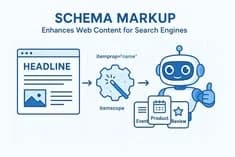
Schema Markup is added to page coding to explain your content to Google more clearly. It can create rich search listings, those enhanced search listings that contain star ratings, prices, FAQ and event date entries.
- Add FAQ schema to your FAQ sections, like this article includes
- Blog posts should use Article schema
- Use Course schema for your online courses (excellent fit for Acadvizen)
- Use LocalBusiness schema if you have a storefront
Even if your site is not in position one, the rich snippets give a high click through rate.
- Core Web Vitals
Core Web Vitals are also a set of metrics for determining user experience. Like the other metrics, these also determine a site’s ranking. They specifically look at loading speed, interactivity, and visual loading stability.
Here the metrics have a specific name and a target to achieve.
- LCP (Largest Contentful Paint): loading speed of the main portion of the site. the target here is under 2.5 seconds.
- FID (First Input Delay): speed at which the site becomes interactive. the target here is under 100ms.
- CLS (Cumulative Layout Shift): a measure of the visual stability of the site during loading. the target here is under 0.1.
Conclusion
On-Page SEO is the foundation of a successful search engine optimization strategy. By optimizing your content, keywords, titles, meta descriptions, headings, images, and internal links, you make it easier for search engines to understand and rank your website. As search algorithms continue to evolve, focusing on user experience and high-quality content remains essential. Whether you're a beginner or an experienced marketer, mastering On-Page SEO can help improve your website's visibility, attract more organic traffic, and achieve long-term digital growth.
FAQ
- What is On-Page SEO?
On-Page SEO is the process of optimizing individual web pages to improve their search engine rankings and attract more relevant traffic. It includes optimizing content, title tags, meta descriptions, headings, URLs, images, and internal links.
- Why is On-Page SEO important?
On-Page SEO helps search engines understand your content and improves user experience. Proper optimization can increase visibility, boost rankings, drive organic traffic, and improve conversion rates.
- What are the most important On-Page SEO factors?
The key On-Page SEO factors include high-quality content, proper keyword usage, optimized title tags and meta descriptions, heading structure (H1-H6), image optimization, internal linking, mobile-friendliness, and fast page loading speed.