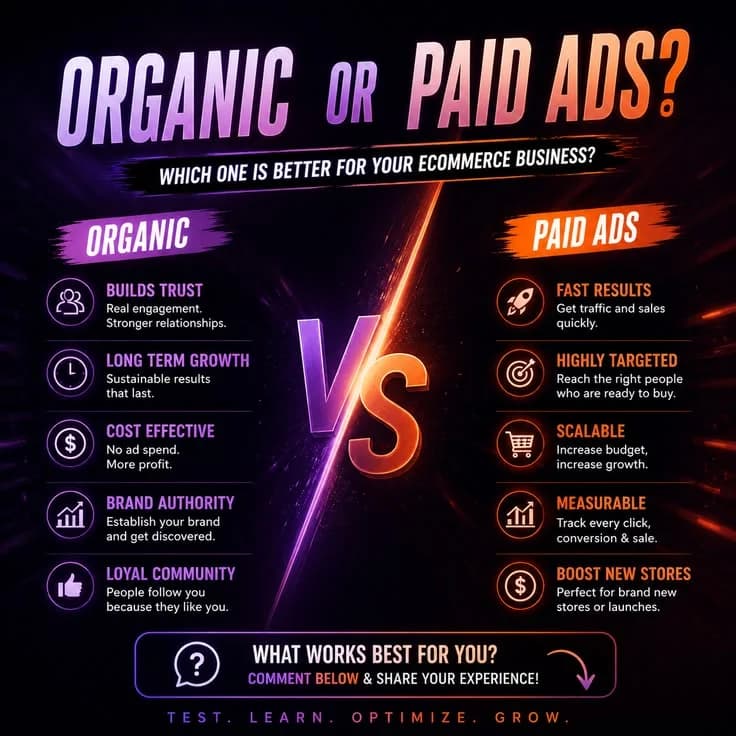
In the world of digital marketing, beginners often face a critical choice: dive into paid ads or start with affiliate marketing. Both can generate income online, but they differ significantly in upfront investment, risk levels, earning timelines, and overall ROI. This comprehensive guide compares paid ads vs affiliate marketing to help new marketers decide the best path.
Whether you're exploring affiliate marketing for beginners or paid advertising for beginners, understanding these models is essential. We'll break down the mechanics, pros/cons, real-world examples, and strategies tailored for newcomers aiming for sustainable profits.
Understanding the Two Models
What is Affiliate Marketing?

Affiliate marketing is a performance-based model where you promote other companies' products or services and earn a commission for each sale, lead, or click generated through your unique affiliate link. You don't handle inventory, customer service, or product creation.
Popular programs for beginners include Amazon Associates, ClickBank, ShareASale (Awin), and others offering commissions from 1-75% or more on digital products. Many provide recurring commissions, ideal for SaaS or subscription services.
Beginners typically start with content creation (blogs, YouTube, social media) or email lists to drive organic traffic.
What are Paid Ads?
Paid advertising involves paying platforms like Google Ads, Facebook/Meta Ads, TikTok, or YouTube to display your ads. You pay per click (PPC), impression, or other metrics, aiming to drive traffic to a landing page, product, or offer that converts into sales.
As a beginner, you might run ads for your own products, services, or even affiliate offers (though many programs restrict or prohibit paid traffic on certain links).
Upfront Investment: A Major Difference for Beginners
One of the biggest contrasts in paid ads vs affiliate marketing for beginners is the initial capital required.
Affiliate Marketing Upfront Costs (Low Barrier)
Domain and hosting: $50–150/year.
Website builder (WordPress): Free to low-cost themes/plugins.
Content creation tools: Often free (Canva, Google Docs) or $10–50/month.
Email marketing (Mailchimp free tier): Starts at $0.
Total starter budget: Under $200–500.
Many succeed with zero dollars using free platforms like social media, YouTube, or Medium. The main "cost" is time invested in creating valuable content.
Paid Ads Upfront Costs (Higher Barrier)
Ad spend: $500–$5,000+ per month for testing and optimization. Beginners often lose money initially while learning.
Landing page tools (ClickFunnels, Leadpages): $100–300/month.
Analytics and tracking software: $50–200/month.
Design/graphics: Variable.
Total: Easily $1,000+ in the first month, with ongoing budgets.
Verdict on Investment: Affiliate marketing wins for cash-strapped beginners. You can test ideas without financial risk, while paid ads require a learning budget that many new marketers underestimate.
Risk Comparison
Affiliate Marketing Risk (Lower)
Performance-based: You only "pay" with time. No sales = no commissions, but no direct monetary loss beyond opportunity cost.
Diversifiable: Promote multiple products across niches.
Algorithm changes affect traffic, but content assets often retain long-term value (evergreen SEO content).
Common risks include account bans (if violating terms), low conversion rates initially, and building audience trust.
Paid Ads Risk (Higher)

You pay regardless of results. Poor targeting or unoptimized campaigns can burn through budgets quickly.
Ad fatigue, rising CPMs, platform policy changes, and competition.
Beginners frequently report losing $500–$2,000 before seeing positive returns due to testing.
Verdict on Risk: Affiliate marketing is far safer for beginners. Paid ads suit those with experience or dedicated testing capital. Many affiliates eventually layer in paid traffic once they have proven offers.
Earning Timelines
Affiliate Marketing Timeline
First commissions: Weeks to 3–6 months (faster with paid boosts or strong content).
Consistent income: 6–12 months for most, scaling to full-time in 1–2 years with persistence.
Passive potential: High, as content and email lists generate ongoing referrals.
Realistic beginner goals: $100–500/month initially, scaling to thousands with audience growth.
Paid Ads Timeline
Faster potential: Sales within days if campaigns are dialed in.
Profitability: Often 1–3 months of heavy testing and optimization.
But sustainability requires constant management and budget. Many beginners quit after early losses.
Verdict on Timelines: Paid ads offer quicker (but riskier) wins. Affiliate marketing builds slower but more sustainable results for most beginners.
ROI Analysis: Affiliate Marketing ROI vs Paid Ads
Affiliate Marketing ROI
Industry average: Around $6.50 return per $1 spent (including tools/content).
For beginners: Positive ROI once traffic converts. Focus on organic methods keeps costs low.
Calculation example: Spend $500 on content/tools → Earn $2,000 commissions → ROI = (($2,000 - $500) / $500) × 100 = 300%.
Strengths: Scalable with content/SEO/email. Recurring commissions boost lifetime value.
Paid Ads ROI
Average ROAS (Return on Ad Spend): Varies widely (Google often cited around 8:1 for some, but beginners see 1:1 or losses initially).
High potential but requires expertise in bidding, targeting, copywriting, and landing pages.
Beginners often struggle with breakeven due to learning curve.
Overall ROI Winner for Beginners: Affiliate marketing generally delivers better ROI due to lower costs and risk. Paid ads can outperform with skill but demand more upfront mastery.
Pros and Cons Breakdown
Affiliate Marketing Pros

Low/no financial risk.
Passive income potential.
Learn marketing fundamentals (content, SEO, email).
Flexible niches and products.
Cons
Slower initial results.
Dependent on platform/algorithm changes.
Building trust and audience takes effort.
Paid Ads Pros
Fast scaling and testing.
Precise targeting.
Controllable traffic volume.
Cons
High cost and risk.
Steep learning curve.
Ongoing management required.
Strategies for Beginners in Affiliate Marketing
Choose a Niche: Solve problems you're passionate about (health, finance, tech).
Build a Platform: Start a blog, YouTube channel, or Instagram/TikTok presence.
Join Beginner-Friendly Programs: Amazon Associates, ClickBank, etc.
Create Valuable Content: Reviews, tutorials, comparison posts.
SEO and Email List Building: Drive free traffic and nurture leads.
Track and Optimize: Use free tools like Google Analytics.
Scale Gradually: Add paid traffic later for proven offers.
Strategies for Beginners in Paid Advertising
Start Small: Use platform ad credits or low daily budgets ($10–50/day).
Learn the Platforms: Facebook Blueprint, Google Skillshop (free courses).
Focus on High-Intent Keywords/Audiences.
Test, Test, Test: A/B variations of ads and landing pages.
Retargeting: Crucial for improving conversions.
Compliance: Follow ad policies strictly to avoid bans.
Many beginners combine both: Build affiliate content for organic traffic, then amplify with paid ads.
Real-World Examples and Case Studies
Affiliate Success: Many creators earn $5k–$50k+/month after 12–24 months via SEO content and email lists. Niches like software and finance perform well.
Paid Ads Challenges: Beginners often report initial losses of hundreds before optimizing to profitability. Successful ones treat it as a full business with dedicated budgets.
Hybrid approaches (affiliate sites + paid traffic) frequently yield the highest long-term ROI.
Common Mistakes to Avoid
Affiliate: Promoting too many products without focus; ignoring mobile optimization; neglecting disclosures.
Paid Ads: Jumping in without testing; ignoring negative keywords; poor landing page experience; chasing vanity metrics.
Both: Not tracking ROI properly; expecting overnight success; failing to provide value.
Tools and Resources for Beginners
Analytics: Google Analytics, UTM parameters.
Affiliate: Networks mentioned earlier + tracking like Voluum (advanced).
Ads: Platform managers + spy tools for competitors.
Content: Ahrefs/SEMrush (free tiers), Canva.
Which Has Better ROI for Beginners?
For most new marketers, affiliate marketing offers superior ROI due to minimal upfront investment, lower risk, and potential for passive, scalable income. It allows you to learn marketing without financial pressure.
Paid ads excel for those with capital, testing experience, or who need immediate traffic. They can complement affiliate efforts once you're established.
Recommendation: Start with affiliate marketing for beginners to build skills and assets. Use earnings to fund paid ad experiments. This hybrid path minimizes risk while accelerating growth.
The "better" choice depends on your resources, risk tolerance, and goals. Consistency and learning from failures matter most in both.
Final Thoughts and Action Steps
Define your niche and goals.
Set up a simple website or profile.
Join 2–3 affiliate programs.
Create your first 5 pieces of content.
Track everything and iterate.
Educate yourself continuously via free resources, courses, and communities.
Success in paid ads vs affiliate marketing comes from value creation and persistence. Start today, stay consistent, and the ROI will follow.
This post is optimized for the focus keyword and secondaries, providing real value for readers searching these terms. Feel free to customize with personal experiences or images!
- What is the difference between paid ads and affiliate marketing?
Answer: Paid ads involve spending money on platforms like Google Ads or Meta Ads to drive traffic and generate sales or leads. Affiliate marketing involves promoting another company's products or services and earning a commission for every successful sale or action. Paid ads require an advertising budget, while affiliate marketing focuses more on content creation, SEO, and audience building.
- Which is better for beginners: paid ads or affiliate marketing?
Answer: It depends on your budget and goals. If you have limited funds, affiliate marketing is usually the better starting point because it has lower upfront costs. If you have a marketing budget and want faster results, paid ads can deliver quicker traffic and conversions.
- Do I need money to start affiliate marketing?
Answer: No, you can start affiliate marketing with little to no investment by creating content on a blog, YouTube channel, or social media platform. However, investing in a website, SEO tools, or email marketing can help you grow faster.
- How much budget do I need to start running paid ads?
Answer: Beginners can start with a small daily budget, typically ₹500–₹2,000 per day, to test campaigns. The ideal budget depends on your industry, competition, and advertising platform. Start small, analyze performance, and scale successful campaigns.
- Which method offers a faster return on investment (ROI)?
Answer: Paid ads can generate results within days if your campaigns are well-optimized. Affiliate marketing generally takes several weeks or months because it relies on building trust, creating content, and attracting organic traffic.
- Is affiliate marketing less risky than paid advertising?
Answer: Yes. Affiliate marketing carries lower financial risk because you don't have to spend money on advertising to get started. With paid ads, poor targeting or campaign setup can quickly lead to wasted ad spend.
- Can I combine paid ads with affiliate marketing to increase earnings?
Answer: Yes. Many marketers use paid ads to drive traffic to high-converting affiliate offers. Before doing so, ensure the affiliate program allows paid advertising and always comply with its promotional guidelines.
- How long does it take to make money with affiliate marketing?
Answer: Most beginners start seeing results within 3–6 months when consistently publishing quality content and optimizing for SEO. The timeline varies depending on your niche, competition, and marketing strategy.
- What are the biggest mistakes beginners make with paid ads and affiliate marketing?
Answer: Common mistakes include choosing the wrong niche, targeting the wrong audience, ignoring keyword research, failing to track campaign performance, promoting low-quality products, and expecting instant profits without testing and optimization.
- Which strategy is more profitable in the long run: paid ads or affiliate marketing?
Answer: Both can be highly profitable when executed correctly. Affiliate marketing often provides sustainable, long-term passive income through evergreen content, while paid ads can scale revenue faster but require continuous investment. Many successful marketers combine both strategies to maximize ROI.