Overload in Marketing? The Issue Lies in Strategy

If your digital marketing efforts are not producing the results you expect, the first reaction may be to do more—post on more platforms, spend more on ads, create more content, or try every new marketing tool you come across.
But more activity does not always mean better results.
Whether you are a business owner, freelancer, student, marketer, or someone building practical digital marketing skills, the real challenge is often the lack of a clear and structured digital marketing strategy.
A strong strategy connects every activity to a specific goal. SEO, Google Ads, Meta Ads, social media, content marketing, website optimization, analytics, and AI tools should not work separately. Each channel should support the next step in the customer, learning, or campaign journey.
Without this structure, digital marketing can quickly become overwhelming. You may be working hard, spending time and money, and using multiple platforms—but still struggle to understand what is working, what needs improvement, and where to focus next.
The solution is not simply to do more marketing.
It is to build a smarter system where every activity has a purpose, every channel is connected, and every result can be measured.
This ultimately leads to a total waste of resources, time and effort.
A comprehensive digital marketing strategy is the best tool to integrate all the activities of a business and effectively progress toward a larger business objective.
Understanding Digital Marketing Strategies
A digital marketing strategy outlines the details of a marketing campaign including goals, the audience, marketing channels, campaign materials, and analysis.
A well thought out digital marketing strategy includes the means to track results and shows how marketing efforts will be adjusted in the future.
Knowing the distinctions between strategies and marketing channels/tactics is important.
A strategy outlines why, when, and how different tactics will be utilized.
SEO and Google Ads are marketing channels. Strategically, a business may utilize a combination of channels to reach potential customers at different steps of their customer journey.
Like the customer journey, a marketing strategy should include different touch points along the customer journey.
The strategy should be defined by clear goals.
Why Digital Marketing Efforts Fail Despite Time, Budget, and Consistency
Many people invest significant time, effort, and money into digital marketing but still struggle to achieve meaningful results. The problem is often not a lack of activity. It is the absence of clear objectives, proper tracking, and a strategy that connects each marketing action to a measurable outcome.
Success should not be judged only by impressions, likes, followers, clicks, or website traffic. These numbers can be useful, but they do not always show whether a campaign is actually working. A stronger approach is to focus on outcomes such as qualified leads, enquiries, registrations, conversions, customer acquisition, sales, or other goals relevant to the campaign.
- Traffic Is Not the Same as Results
Getting more website visitors may sound like a good objective, but traffic alone does not guarantee success.
Instead of setting a broad goal such as
“We want more website traffic.”
Set a measurable objective such as
“We want to generate 100 qualified leads every month.”
Once the goal is clear, you can work backwards. You can estimate how many visitors are required, what conversion rate you need, which channels can bring the right audience, and how much budget or effort may be required.
The same principle applies to freelancers and learners. A freelancer may focus on generating client enquiries, while a learner may focus on building practical campaign experience, improving skills, or creating a stronger portfolio.
The goal determines the strategy.
- Posting on Social Media Without a Clear Purpose
Posting every day does not automatically create a strong social media strategy.
One day you may publish an educational post, the next day a promotional creative, followed by a trending Reel or a random quote. The account may look active, but the content may not guide the audience toward any specific action.
Every piece of content should have a purpose.
Some content can educate the audience and explain a problem. Other content can demonstrate expertise through tips, projects, case studies, or practical examples. Trust-focused content can include reviews, testimonials, results, or success stories, while conversion-focused content can encourage users to enquire, register, book a consultation, or make a purchase.
Instead of asking
“What should I post today?”
Ask
“What should my audience understand or do after seeing this content?” This creates a much more focused content strategy.
- Higher Ad Spend Does Not Always Mean Better ROI
Increasing your advertising budget cannot fix a weak marketing funnel.
An advertisement may successfully attract attention and generate clicks, but the user experience after the click is equally important. If the landing page is confusing, slow, overloaded with information, or unrelated to the advertisement, users may leave before taking action.
The same problem can occur with lead forms. A strong advertisement may bring the right audience to a landing page, but if the form asks for too much information or feels complicated, potential leads may abandon it.
A better approach is to review the complete journey
Ad → Landing Page → Call to Action → Form → Lead → Follow-up → Conversion Each stage should be simple, relevant, and connected to the previous step.
Before increasing the budget, identify where users are dropping off and improve that stage first. Once the conversion journey is working properly, scaling the campaign becomes much more effective.
The Key Lesson
Digital marketing performance does not improve simply because you post more often, generate more traffic, or spend more on advertising.
Better results come from clear goals, relevant content, a smooth user journey, accurate tracking, and continuous optimization.
Whether you are learning digital marketing, managing campaigns, freelancing, or growing an organization, the objective should remain the same: make every marketing activity purposeful and measurable.
A lot of unrelated factors may affect the overall performance of an advertisement.
Increasing advertising spending may also increase site traffic. But site traffic doesn't always translate to leads. If 1,000 visitors resulted in five leads, there's a good chance increasing the advertising budget will result in increased wasteful spending.
To improve the conversion rate by optimizing site design or content, for example, may result in a greater return on investment than increased spending.
- Viewing SEO and Paid Advertising as Disconnected Channels
SEO and paid advertising often intersect. SEO and paid advertising can also be mutually beneficial. For example, a user may search for "digital marketing course in Bangalore." If a paid advertising campaign is also geared towards this search term, the advertising campaign may lead to an increase in website visitors. If the campaign is effective, the website may also gain long term organic search engine results for related queries. Therefore, paid advertising and SEO can complement each other.
often, the best solution is to utilize both paid advertising and SEO and to establish a clear boundaries and a defined purpose for each channel.
- Directing All Site Visitors to the Homepage
A homepage usually encompasses broad and general information, and is therefore unable to encompass all details for each individual marketing campaign. For example, an individual may click an advertisement for "Google Ads Training" but is directed to a homepage that contains information for multiple unrelated courses. As a result, the user must determine the location of the information relevant to the marketing campaign for which they searched. Each additional step required of a user increases the likelihood the user will leave the website.
A better method involves generating different landing pages for
Service/product/course offerings
Locations
Promotional offers
Campaigns
These pages need to continue the promises made in the respective ads.
An ad offering a “free digital marketing demo” must be followed by a landing page where the user can easily schedule that demo.
Users will have a better, and therefore more probable, experience if the message on the landing page is consistent with the advertisement or other touch points that led the user there.
Customer journey should be the foundation of your digital marketing strategy.
The customer journey can be divided into four main phases.
Phase 1: Awareness
The goal of this phase is getting a prospect to recognize your presence.
This can be accomplished through strategies like
Search engine optimization
Content creation
Short-form videos
The focus of these engagements should be providing value and building interest, instead of trying to sell.
Phase 2: Consideration
Prospects have recognized their problem and are seeking potential solutions.
This is a good phase to engage with
Videos
Testimonials
Case Studies
This content should be readily available on your site.
Phase 3: Conversion
The customer is ready to make a purchase.
Strategies like
Lead generation
Free consultations
Demo registrations
Offers
should be utilized.
Phase 4: Retention
Once a customer has purchased, your engagement with that customer should continue.
Customers can be a source of repeat business and referral business.
Use methods including
WhatsApp communication
Customer support
Loyalty programs
Teaching
Upselling and cross-selling
Soliciting reviews
Think beyond lead generation, and consider how to increase the value and LTV of your clients.
The Best Digital Marketing Strategy for Your Business
It is better to excel in a select few digital marketing channels than to be mediocre in many.
Limited resources can be strategically allocated towards high-potential digital marketing channels in order to improve business results.
An effective digital marketing strategy for your business can include
A marketing website
A marketing website is the central location where all other elements of your digital marketing strategy are integrated.
Design and develop your marketing website based on the following
What is your business offering?
Who are the potential customers?
Why should the customer trust your business?
What is the next step?
SEO Strategy
SEO is a way for your business to become discoverable and visible for potential customers who are searching for products and services online.
You should consider the following in your SEO strategy
What do searchers want to know?
Does your website function properly?
Do you provide relevant information about your business to searchers?
Are you located in your service area?
Do you have sufficient and relevant content?
Are your web pages structured in a way to provide information about your area of expertise?
Are your web pages interconnected?
Do you have sufficient and adequate content for your targeted topic?
Consider paid search ads if you want to immediately capture customers who are searching for products and services your business offers.
In order to meet your business goals, focus on Facebook and Instagram advertising to raise brand awareness, and generate and capture leads.
Why do businesses waste time and money showing the same ads to everybody? Audience segmentation is essential to any successful digital marketing strategy.
Cold Audiences
Instead of showing generic ads to the cold audience, marketers can show educational content to that audience, thus warming that audience to some degree.
Marketing to Past Website Visitors
Marketers know that some website visitors do not submit lead forms. Why not provide a message geared toward website visitors that did not submit lead forms?
The idea is to provide a lead form submission message that is more enticing than the lead form submission message provided to audiences with no lead form submission message.
Marketing on Social Networks
Marketing on social networks should be strategic and aligned with the marketing goals of the business. For example, a business should set goals to improve the number of branded searches, increase conversion rates, the number of leads generated, and improve the trust of the target audience of that business. Relevant marketing activities should be implemented to achieve those goals. The business should set goals and implement activities to achieve those goals. For example, a business may set a goal to increase the number of conversions.
Digital Marketing should be data-driven
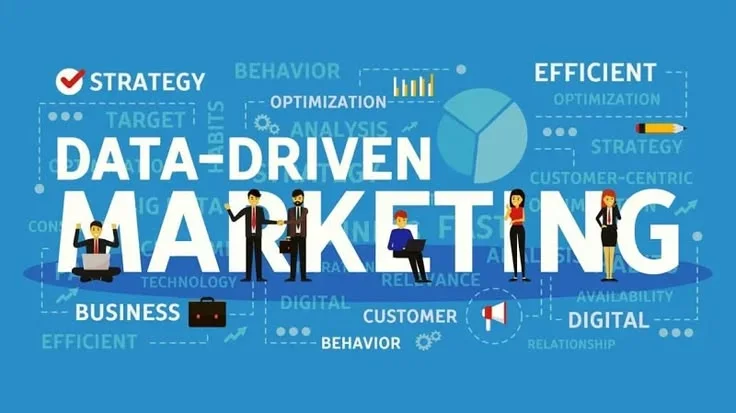
For a business to improve its digital marketing efforts, the business should focus on data relevant to the core activities and outcomes of its marketing. Improving the quality of leads generated by the marketing efforts should be a priority for a business. If the marketing efforts of a business are not contributing to revenue generation, the efforts of that business should be assessed.
Align Your Marketing Channels
For a business to be successful with its marketing efforts, both marketing trucks should be equally loaded with marketing efforts. The marketing efforts of the business should be aligned.
Unintegrated marketing is marketing schizophrenia. The more channels you activate, the more confusing and fragmented your message becomes. But integrated marketing is easier to decipher. This is what we aim to achieve. Make a website that converts. Use paid ads to capture new customers. Raise awareness and nurture leads using social media. Use SEO to increase the discoverability of your website. Don’t forget to track your efforts using analytics. This is the basic idea of a digital marketing strategy. Our goal should not be to do more marketing, but to integrate the different channels of marketing to achieve our business goals.
A Simple Digital Marketing Strategy Framework
Prior to the launch of your next marketing campaign, you should be able to answer the following questions.
Who is your ideal customer?
What are their pain points?
What are your company goals?
What are some of the online places your target customer is visiting?
What type of content will capture their attention?
Where will they be directed to after they click on your marketing content?
What type of metrics will you use to determine if your marketing campaign was successful?
If the members of your team are unable to provide the answers to the questions above, increasing your marketing budget should not be the first thing you consider. First, evaluate your digital marketing campaign and make improvements where necessary.
What is the importance of SEO and Google Ads for a business?
Google Ads give your business quick visibility. On the other hand, SEO helps in the development of a business’s online visibility in the long run. A business benefits from using both Google Ads and SEO.
What can be done to improve return on investment in a business?
To improve return on investment, you need to track the conversions in your business and identify the best customers and the best channels through which your business can operate. You can improve the performance of your business by removing underperforming advertisements and increase your business’s spend on advertisements that help in lead generation.
What components should be included in a digital marketing strategy?
The components that should be included in a digital marketing strategy are the target customers of a business, the goals of the business, the position of the business’s products relative to the competitors, the marketing and sales channels of a business, the content of a business, the advertisements of a business, the web pages of a business, the budget of a business, the metrics that represent the performance of a business and the analysis of the performance of a business.
What does marketing do?
Marketing helps a business to achieve its goals by reaching and influencing its customers to purchase its products and services.
What is needed to improve marketing in a business?
To enhance the results achieved through marketing, marketing activities should be analyzed to identify the best strategies that helped in lead generation and improvement of qualified customers. Underperforming strategies and activities should be stopped.