Voice Search Optimization: Is Your Brand Ready for 2026? The Alarm Is Ringing — And Most Brands Are Still Asleep
Is your brand ready for voice search in 2026? Learn the latest voice SEO strategies to improve visibility, attract more customers, and stay ahead of the competition.
23 min read

It's 7:14 AM, and someone is trying to get to work on time. They ask, "Hey Siri, where can I find a coffee shop that opens before 7:30?" Almost instantly, one shop shows up, gets the business, and the rest get ignored, maybe including your shop.
Voice search is here. It is changing how customers find brands. It is already deciding business winners and losers. Voice search is going to become the primary way to search online. It is expected that by 2026, more than half of searches done online will be through voice search. The rapid advancement of mobile assistants and voice-controlled applications has changed the way questions are searched.
The real question is not how important is voice search. It is how easily people are going to find your brand when they search through voice.
If your search engine optimization only focuses on short phrases like "best pizza NYC", and your competitors’ optimize their businesses like, "What is the best pizza place that is open right now in Times Square?" — your business loses. The following has the information that will assist your business in the transitioning stage of voice search to become the best.
Why Voice Search SEO 2026 Is a Whole New Ball Game
Voice search SEO and traditional search engine optimization are not the same. Recognizing the big difference between the two is the first step to closing the gap.
When people enter a search term in Google, they tend to use very simplistic language. For instance, they may just enter "Delhi Mumbai flight book cheap" to get results. But in regular language one would usually ask, for example, "What is the cheapest flight from Mumbai to Delhi this weekend?"
There is a major difference in the way these two communicates that needs to be adopted across all platforms, from the way you structure your data to your pages to your metadata, and even your business listings.
Your brand should recognize the following differences
Text Search vs. Voice Search
Text: users input short and keyword-dense questions
Voice: users input full, natural language sentences
Text: users have to scan multiple results
Voice: device reads a single result
Text: users have to scroll
Voice: users expect an instantaneous answer
This is why a voice search SEO strategy for 2026 cannot build upon existing strategies; it has to be complete overhaul.
The 5 Pillars of Voice Search Optimization in 2026
- Master Conversational Keywords
The dominant aspect of voice search for SEO in 2026 is conversational keywords. You have to stop taking an approach that centres on optimising for keywords typed and instead optimise for keywords spoken.
Conversational keywords are longer phrases that sound more like natural speech. These longer phrases or even entire questions often start with:
Who, What, When, Where, Why, How
Examples of conversational keywords based on the above interrogative words
What: What are the side effects of intermittent fasting?
Why: Why is my website traffic dropping?
How: How do I remove a coffee stain from a white shirt?
When looking for conversational keywords, you can
When looking for conversational keywords, you can
Use tools such as AnswerThePublic, AlsoAsked, or the "People Also Ask" section in Google
Analyze your customer support chat logs
Expand your FAQ section
Use Google Search Console to find queries that already bring voice traffic
Your next step is to take your 10 most important pages and add a "Questions People Ask" section. Write in a natural tone, respond to questions easily, and keep your response length between 40-60 words.
- Win Featured Snippets - The Voice Search Holy Grail

To understand voice search in 2026, you first need to understand voice search and position zero; the Featured Snippet.
When voice assistants read answers to queries, they almost always search and retrieve response text from Google's Featured Snippet. Winning a Featured Snippet drives traffic to your site, while simultaneously allowing your brand to be the definitive answer to that query.
Typically, here is what Google looks for in a featured snippet
The snippet answers the question
The response is thorough, but succinct
The domain is authoritative
The content is well-structured and uses markups
Featured Snippet Types
Paragraph Snippets
Most common for snippet answers via voice search
To get this featured snippet type, provide a 60 word, or fewer, response directly following the H2 question.
For example
H2: What is voice search optimization?
lead with an answer
then provide supporting information.
List Snippets
Voice search applications read steps and list items in a sequential manner, so for "how-to" and "steps" guides, use a bulleted or numbered list.
Table Snippets
Use a table for content featuring comparisons, especially for product reviews, pricing, or features.
For a guaranteed shot at a featured snippet, mark up your content using `FAQPage` and `HowTo` schema.
- Local Voice Search
Brands are leaving lots of money on the table when it comes to local voice search.
Here are some examples of searches with likely local intent, and examples of searches that make businesses money.
"Find a gym near me open right now"
"Best sushi restaurant in Koramangala"
"Plumber available today in HSR Layout"
The people making these searches are ready to spend money. If you don't show up in these searches, someone else is making that money.
Checklist for Local Voice Search Optimization
✅ Fully Optimized Google Business Profile
Your Google Business Profile is the most significant listing for local voice search. Ensure that your:
Business Name, Address, and Phone Number (NAP) are fully listed
Business Categories are as specific as possible
Business Hours, including Holiday Hours, are posted
Photographs are both recent and of high quality
Reviews are responded to in an active and professional manner
✅ NAP Network Consistency
Your Business Name, Address, and Phone Number (NAP) need to be listed identically in Google, Yelp, Justdial, Sulekha, Facebook, and all other relevant industry directories. Even the smallest discrepancies may throw search engines off.
✅ Your Website Includes Hyper-Local Content
Your website should contain references to your specific community, your local landmarks, and events. Being able to say on your website, ‘we are only two minutes away from the MG Road Metro Station’ is far more valuable for local voice search as compared to generic location web pages.
✅ Voice Searches With "Near Me" Keywords
It is not effective to add keywords just for the sake of it; however, relevant and localized content gives a significant value and suggests the locality, if as an example, you say “in (city)” or “(service) near (neighborhood)” and other phrases of that nature.
✅ Optimized for Mobile and Fast Loading Pages
The bulk of voice searches are done on mobile devices. Optimized Core Web Vitals are a large factor that Google uses to determine your ranking. Utilize PageSpeed Insights to determine and correct loading issues for your website.
- Voice Search and Content Structure
The content structure and the overall architecture of your website need to be re-designed for voice search.
Build a Comprehensive FAQ Section
In 2026, dedicated FAQ pages will continue dominating as the most valuable page type for voice search SEO. Group questions in your FAQ section by:
Topic clusters (i.e., consolidate all pricing questions)
Each stage in the user journey (awareness, consideration, purchase)
Service or product lines
Apply `FAQPage` schema markup for every FAQ page. This boosts your chances for Featured Snippets and Rich Results in Google Search.
Use a Casual Tone Everywhere
Review all pages of your site. If they are too formal like a brochure, change them to be more casual like a conversation. You should utilize the second-person view ("you"), maintain an active voice, and keep your sentences short. Your target should be for your pages to be Flesch-Kincaid reading ease of 60 to 70.
Aggressive Page Speed Optimization
Users expect near-immediate results when they utilize voice search. Fast sites help improve search rankings. Aim for:
Adopt Schema Markup
Schema markup tells search engines what your content means. There are several schema types that cover specifics about your content. See critical types for voice search below:
`FAQPage`: Q and A format
`HowTo`: content that details how to complete a task
`LocalBusiness`: schema for local searches
`Product`: e-commerce voice search
`Review` and `AggregateRating`: trust factor schema
- More Device Optimization
By 2026, voice searches will happen on a plethora of devices.
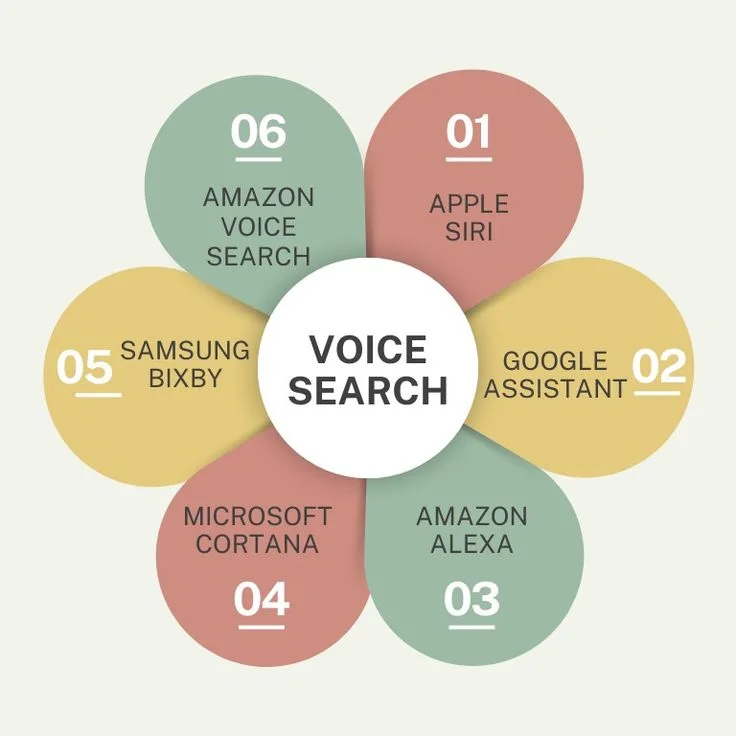
Smartphones (Google Assistant, Siri, Bixby)
Smart speakers (Amazon Echo, Google Nest, Apple HomePod)
Smart TVs and streaming devices
Wearables (Apple Watch, Galaxy Watch)
In Cars (Android Auto, Apple CarPlay)
Although each has different behaviors, all require content that is fast, direct, local, and conversational.
Smart Speakers

Amazon Alexa and Google Nest pull information in from different sources. For Alexa, your Amazon listings and Yelp are very important. For Google Nest, your Google Business Profile and your website schema are very important. Optimize for both.
Common Voice Search SEO Mistakes
Going Mobile Last
If your site is not mobile first, your site is invisible to voice search.
What to Avoid
❌ Only Short-Tail Keywords: Voice queries are about 5-7 words, so short keywords will not do.
❌ Skipping Schema Markup: Without structured data, you are leaving it to Google to figure out the context of your content.
❌ Neglecting Google Business Profile: For brands with a local focus, this is your home page for voice search.
❌ Reading, Not Listening: Content should sound natural when read aloud.
❌ Ignoring Page Speed: Voice search users will leave a slow page in under 3 seconds.
Your Voice Search Readiness Audit: A Quick Checklist
To see the current status of your brand, use the checklist below.
Content
[ ] FAQ pages with FAQ schema
[ ] Answers are 40 - 60 words
[ ] Conversational tone for the entire site
[ ] Long-tail, question-based keywords
Technical
[ ] Mobile page speed is 80 or more (PageSpeed Insights)
[ ] Schema done for LocalBusiness, FAQ and HowTo
[ ] All pages are HTTPS
[ ] Mobile checked
Local
[ ] Complete and verified Google Business Profile
[ ] NAP is the same across all directories
[ ] Local keywords in page content and metas
[ ] Recent, responded reviews on GBP
Score yourself: 10 - 12 checked = Voice ready. 6 - 9 = Needs work. Under 6 = Start immediately.
Are You Ready to be the Voice Heard by Your Customers?
Voice search SEO 2026 is an immediate need rather than a long-term consideration. Brands that are winning voice search today began their optimizations 12 months ago. Brands that will win voice search in 2027 are those that begin this month. We recommend the following:
This Week: Review your Google Business Profile and complete any missing fields. Ensure the information is accurate to the best of your knowledge.
This Month: Add an FAQ section to your top 5 most visited web pages. Use schema markup for all 5 pages and include 10 or more conversational style questions.
This Quarter: Perform a voice search keyword audit. Identify and map conversational queries to all phases of your customer journey. Generate content that answers these queries.
This is a start, but, don’t stop there. Capture and monitor your Featured Snippet placements using SEMrush or Ahrefs. Review your Google Business Profile, Insights, and Local Search rankings on a monthly basis.
The opportunity is here and now. Your competitors are still reading, but you are executing.
Frequently Asked Questions Regarding Voice Search SEO 2026
Q1. What is voice search SEO? Why is it important in 2026?
Voice search SEO means optimizing your web content so that voice assistants (Google’s Assistant, Siri, Alexa, etc.) can find your content and read it aloud as the answer to a user’s question. In 2026, it is expected that more than half of all search queries will be voice based. Thus, in order to remain competitive in an SEO sense, a voice search optimization strategy will be necessary.
Q2: How does voice search differ from traditional text search?
Voice search queries tend to be longer, more complete, and often more conversational. They tend to look like full sentences or questions, such as, “what is the best way to remove a stain?” In contrast, typical text search queries are often abbreviated and fragmented. For example, the above query may be typed as “stain removal tips.” Voice search also only provides a single result answer, while text searches typically show a large number of results. Because of this, being the single result answer provided by voice search is much more important than being just one of the many results shown for traditional search.
Q3: What are conversational keywords and how can I locate them?
Conversational keywords tend to be longer and will often look like complete sentences or questions. More importantly, they will often begin with who, what, when, where, why, or how. Examples of where conversational keywords can be found include your customer service queries, AnswerThePublic, Google's “People Also Ask” boxes, and Google Search Console.
Q4: What role do voice search and Featured Snippets play?
Voice assistants almost always cite their answer from Google’s Featured Snippets (Position Zero). If your brand wins a Featured Snippet, your brand will most likely become the answer to that query. This increases your brand visibility, and your audience may never have to visit your website to see the answer.
Q5: How vital are voice searches to local SEO?
Voice search and local SEO go hand-in-hand. “Near me,” and “in [city],” are just a few examples of what most voice search queries are. Having an optimized Google Business Profile, consistent NAP data, and localized web content are the most important factors for local voice search queries.
Q6: Do I need technical knowledge to optimize voice search?
Advancing content tone, developing FAQ pages, and Google Business Profile updates improve voice search functionality and don’t need technical skills. However, developing schema markup, and enhancing site speed do need a developer and/or an experienced SEO consultant.
Q7: How long does search voice SEO take to work?
Generally, SEO works within 3–6 months. However, Google search result snippets, Featured Snippets, and Google Business Profile optimizations can work within 4–8 weeks, and are determined by the niche's market competition.
Q8: Who benefits from search voice optimization?
Voice search optimizations are extremely helpful to local service businesses, e-commerce, healthcare, travel, real estate, and financial service industries because they depend heavily on local, as well as, transactional voice search queries.
Voice search queries are the mode of communication for your future customers. Voice searches will help consumers find businesses and services. Answer the questions consumers have. Drive traffic. Grow your business!