Why Every Marketer Is Discussing AI-Powered Lead Generation
If you have conducted a single Meta or Google Ads campaign in the last year, you have undoubtedly felt this; the cost of running the campaign has gone up, the same audience members see the ad being run and the leads that come in are merely asking questions that are addressed on the product page. The frustration experienced is not a fluke. It is the natural upper limit of traditional, manual lead generation and is the primary reason that the 2026 Smarter Brands are using AI to power lead generation.
This is not a fad. This is a fundamental change in how the platforms decide who sees the advertising, how much the advertising costs, and how likely the person is to purchase the product. In this guide, we will provide some additional details regarding AI-powered lead generation as well as provide insight into why the traditional method to lead generation is becoming obsolete and what can be done to implement AI-based approaches, regardless of if the person is running ads for a small business, for a consulting firm, or for themselves.
What is AI-Powered Lead Generation?
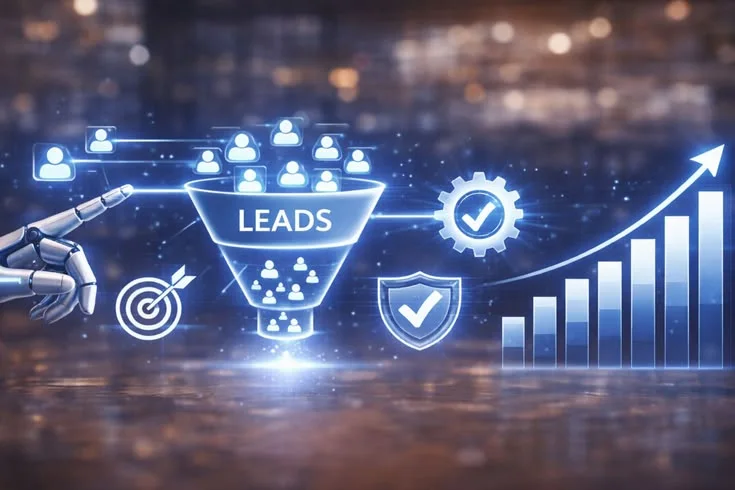
AI-built lead generation automates the attention capture, and prospect evaluation and conversion processes. It doesn’t use humans to identify target advertisement audiences by selecting interests, age, and location. It uses multiple intelligence signals and predictions based on purchase intent combined with browsing and engagement behavior to identify target prospects with the highest probability of conversion.
Three ideas form the basis and constitute the everyday operation of AI-driven lead generation:
Intent-based lead discovery, in which the algorithm looks for prospects whose signals show an intent to buy rather than prospects whose demographics match the target audience.
· Predictive optimization, through which the system tests every potential combination of creatives, placements, as well as bids, and optimizes in real time.
· Continuous learning, which refers to the feedback mechanism of every campaign, where target audience and campaign performance improve over time.
The basic distinction between AI-based lead generation and traditional advertising is the question of “who fits this profile?” and “who is the prospect behaving like a buyer?”, respectively. This defines the rest of the approaches discussed in this article.
Old school Lead Generation: More work, more money
Before AI, digital marketing was basically audience research and segmentation manual tasks. Marketers had to pick an ad audience. Then, unfortunately, they had to cross their fingers and hope the ad system's old, outdated rules would do the rest of the work. That approach still prevails today and is riddled with issues that are the same across the board.
Broad targeting: Get ready for a ton of your ad dollars getting wasted, because inevitably the widest net gets the most poor leads.
Manual ad management: Besides actually creating the ads, it is tedious, time-consuming, and most of the time a hassle to actually manage the ads
Weak leads: Weak targeting gets you weak leads. The result is, unfortunately, weak interest and engagement and a low sales conversion rate.
High CPL, Low ROI: By not tapping into high quality leads, a lot of money is being spent to get very few results.
Insight deficiency: It actually becomes very difficult to determine what works and what does not. At the very least, this leads to a lot of wasted time and effort across several campaigns.
This doesn't necessarily make the old forms of advertising obsolete. Traditional advertising shaped an entirely new industry in digital marketing. However, as the major tech companies like Meta and Google have developed their advertising systems to AI-based delivery, campaigns that continue to solely use manual targeting are now competing against AI-optimized campaigns for the same ad slots, and are losing those ad slots more often than not.
How AI Transforms Lead Generation: Smarter AI, Better Leads
Advanced AI analyzes user intent signals, not just demographics, to deliver precise targeting towards prospects most likely to convert.
AI-driven optimization uses real time testing and results to further optimize ad campaigns. This technology actively adjusts ad spends towards the audience and creative combinations that drive results, rather than ad spends passively being set for a week.
AI-driven lead generation drives high intent, quality leads.
This lead generation technology is proven to drive highly targeted leads and significantly decrease cost per lead (CPL) and increase ROI.
Real time campaign performance data with an AI-focused dashboard drives confident campaigns.
The result is fewer wasted impressions, a shorter path from click to conversion, and a lead list your sales or admissions team are motivated to call.
This is the table every performance marketer should be memorizing, because this is how AI-based tools including Advantage+ campaigns by Meta, Performance Max by Google, and others, are built and sold.
Why AI Makes a Difference for Businesses in Bengaluru and Beyond
For small and medium enterprises in India, and especially for service based businesses, Bengaluru is one of the cities that is saturated with digital advertising and the trend of continuously high customer acquisition costs, AI-based lead generation can truly be the most vital tool for small marketing teams.
Let’s say there is a coaching institute, a real estate developer, a D2C brand, or a training academy using Meta Ads with a low monthly budget. Each of those ads that are being viewed by someone who is uninterested is essentially a waste of money that could have gone to someone who was about to inquire. That’s where AI-targeting fills in that gap, as the algorithm is rebalancing the budget on the audience behaving like purchase consumers now and not the audience that matched an outdated six-month old persona.
In Indian digital marketing, AI has become increasingly important, and the ability to leverage AI is quickly become a competitive advantage for those who can. A Media buyer who can set up signals that optimize AI-driven campaigns is able to understand predictive reports and optimize campaigns around intent and not demographics, and as a result, will be far more successful than those who are still running 2019 campaigns.
Five Practical Ways to Leverage AI for Lead Generation
You don’t have to reinvent the wheel with your marketing stack. Here are five low-hanging actions you can take now.
- Use one of the AI-driven campaign options on the platforms where you currently invest the most like Google’s Performance Max or Meta’s Advantage+, rather than creating each audience manually.
- Signal quality conversions to the algorithm by enabling pixel and conversion API tracking, as predictive optimization will only work as well as the data it is provided.
Objective: Describe the Value Phases of Lead Funnels A Tactic for Aligning Sales Process with Lead Generation for High B2B Conversion Rates
Each sales process lends itself methodically to different lead generation approaches. Conversion rates improve with custom lead gen frameworks. High conversion rates can be achieved with the right lead gen strategy paired to the correct sales cadence. The process begins with the development of a high converting lead funnel. A lead funnel should contain a mobile-optimized landing page, lead capture form(s), custom automation, a WhatsApp opt-in flow, and a smooth end-user experience.
Once traffic begins to arrive on the lead gen landing pages, track the results on a weekly basis in the lead flow dashboard. Optimize lead gen strategies by pivoting resources toward creatives and audience segments that drive lead conversions as indicated in the AI-powered analytics lead gen dashboard.
Combining the above lead gen methods with paid media and SEO, content, and funnel strategies is a better approach versus operating lead gen, sales, and marketing functions in silos.
Objective: Provide Practical Tips for High Conversion Automated Lead Gen Frameworks
For many marketers, new technology helps automate the execution of key parts of the job while moving the focus from manual audience building, A/B testing, bid adjustments, and other related tasks to other higher order strategic priorities that help drive lead generation and conversions. Instead, what many marketers need to focus on is how automation changes the structure and modus operandi of a best practices framework of an AI marketing funnel. The greatest marketing automation frameworks incorporate the interrelated strategies of paid media, SEO, content, and funnel optimization to generate high conversion rates.
AcadVizen’s AI-Integrated Digital Marketing Course in Jayanagar, Bengaluru, addresses this exact gap. The course provides hands-on experience in building real AI-integrated advertising, explains concepts surrounding predictive optimization and intent-based advertising, works through the structuring of lead funnels, and addresses reading the same real-time performance data to distinguish a budget-wasting campaign from a profitable campaign. This course is well grounded in practice and is well suited for beginners in the field of digital marketing or employed professionals whose skills are obsolete in the AI era. This course transforms the adage “AI is changing the landscape of advertising” to “I know how to implement AI-based lead generation advertising.”
Tools and Platforms At the Forefront of the AI-Integrated Lead generation
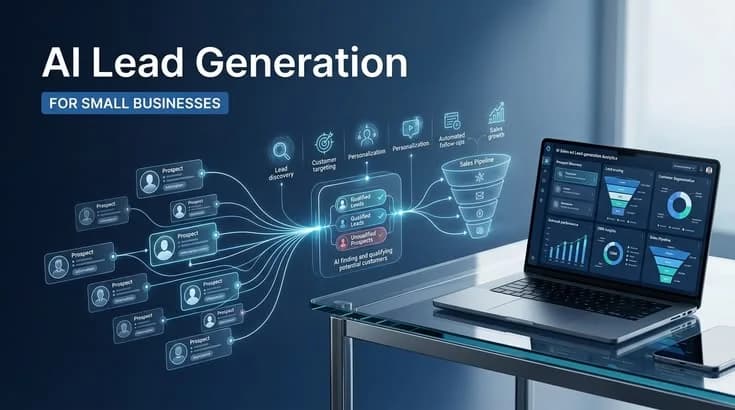
You do not need to create a custom-built machine learning model to employ AI-integrated lead generation. This framework has already taken hold of marketing automation platforms, and understanding their functionalities facilitates the correct use of the tools rather than working against the tools.
●Advantage+ from Meta automates audience expansion, placement, and creative selection. It uses intent and behavioral data from both Facebook and Instagram to identify high quality leads without an audience built in advance.
●Performance Max from Google leverages real time AI to make optimal decisions on the channel and creative combinations for individual users across Search, Display, YouTube, Gmail, and Maps.
- AI-based CRM systems and lead scoring tools reside at the downstream end of the marketing funnel. They detect which incoming leads exhibit the strongest buying signals. As such, sales teams do not have to treat all leads equally and expend effort in equally following up on all leads.
- Predictive analytics dashboards -- whether they are proprietary or third-party -- transform raw campaign data into the real-time insights described earlier in this article. These dashboards show which creative, which segment, and/or which placement are driving conversions.
What separates talented use cases for AI-driven lead generation comes down to the user’s understanding of how these technologies work. If people treat AI lead generation products as black boxes that can be switched on and forgotten, they will most likely be disappointed with the early results and believe that “AI ads don’t work for us.”
Frequently Asked Questions
What is AI-powered lead generation?
With AI-powered lead generation, instead of advertising to target demographic segments (i.e. guessing at who might be interested in a product), marketers use machine learning to detect and target actual behaviors and intent signals. Typically, it results in leads with higher quality, lower cost and better return on investment for the money spent.
How is AI-driven lead generation different from traditional lead generation?
AI-driven technology will analyze all of the intent data and will adjust the budget and creative delivery to the most valuable audience segments to convert. AI-driven lead generation removes the need for audience, interest, and demographic targeting, as well as human analysis for lead generation tests and optimization. Traditional lead generation relies on a team to evaluate weekly runs to adjust the targeting.
Does AI-driven lead generation optimize cost per lead (CPL)?
Most likely. With AI-driven negatively targeted lead generation, the AI concentrates spend on higher intent users. An advertiser’s CPL and conversion rate will improve when the campaign begins optimizing beyond the learning phase.
Is AI-driven lead generation appropriate for only large companies with large budgets?
Not at all. Smaller companies will actually benefit from this technology the most due to the nature of their limited budgets. This new technology will reduce the cost per impression for smaller companies and help more of their marketing dollars go toward qualified leads.
What abilities do I need to run AI-driven lead generation campaigns?
Answering this question requires knowledge of intent-based marketing, conversion tracking, and pixel setup, knowledge of how Ad platforms like Meta and Google use predictive optimization (Meta’s Advantage+ and Google’s Performance Max), and the ability to set up a lead funnel that is designed to capture AI optimized lead traffic. Each of these topics is covered in AcadVizen’s AI-Integrated Digital Marketing course.
Will AI make digital marketing obsolete?
AI is removing manual efforts related to campaign optimization and audience targeting, but marketing strategy is not a replacement opportunity. The opposite is in fact true. As AI enhances marketing efforts, the digital marketers who learn to direct and control AI-generated lead paths become more essential and not less.
Final Thoughts
Once you understand the differences, you’ll agree that AI-powered lead generation is a far superior approach to traditional lead generation. Rather than focusing on broad-based lead generation with limited insights, AI-powered lead generation is intent-based, automated, and provides a real-time verification of lead conversion. You don’t have to take our word for it. AcadVizen’s AI-Integrated Digital Marketing course in Jayanagar Bengaluru is hands-on and gives you the tools you need to run AI-powered lead generation. The best way to learn more about the program and how it is geared toward designing and managing real world marketing campaigns is to reach out to AcadVizen’s team to see available course times and book a consultation.